 邹文安
邹文安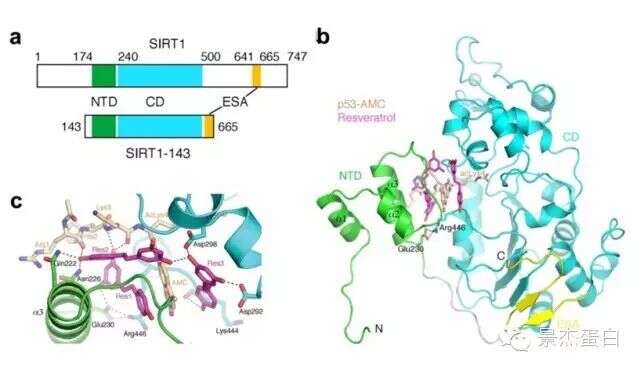
2015年6月15日,美国Genes & Development杂志发表了中国科学院生物物理研究所许瑞明研究组题为"Structuralbasis for allosteric, substrate-dependent stimulation of SIRT1 activity byresveratrol"的最新研究论文,报道了他们关于白藜芦醇促进去乙酰化酶SIRT1酶活性作用机制的最新研究进展。
人源SIRT1是Sir2(Silent information regulator 2)超蛋白家族的成员之一,它是NAD+依赖型的去乙酰化酶,能够催化组蛋白底物和非组蛋白底物(如p53,FOXO3a等)的乙酰赖氨酸进行去乙酰化反应,在染色质重塑、基因调控、代谢、癌症等相关疾病及延缓衰老等方面发挥着重要作用。由于Sir2及其同源物被发现能够延长酵母、线虫及果蝇等模式生物的生命周期,因此SIRT1作为人体中与Sir2最为相似的同源蛋白在延缓衰老这一领域引起了人们的广泛关注。白藜芦醇是植物中提取的一种多元酚,它被发现在体内和体外均可以有效促进SIRT1的去乙酰化酶活性,然而由于在体外活性实验中运用到了一种荧光修饰的小肽,白藜芦醇作为SIRT1激动剂这一观点引起了争论。
许瑞明等人解析了SIRT1"全酶"(包括N端调节区域、催化核心结构域及C端调节区域)与三个白藜芦醇小分子以及AMC荧光标记的p53小肽三元复合物的晶体结构,并且通过突变体实验、结合实验和活性实验确定了三个白藜芦醇小分子的重要性及作用机制。对整个激活过程最为重要的两个白藜芦醇小分子一方面与底物p53小肽的AMC荧光环相互作用,另一方面与SIRT1的N端调节区域相互作用,从而使蛋白与底物之间的结合更为紧密。然而对于没有AMC荧光修饰的天然小肽,白藜芦醇则不能促进SIRT1的去乙酰化酶活性。
这项工作阐述了白藜芦醇依赖于荧光修饰的底物和SIRT1的N端结构域来促进SIRT1酶活性的分子机理,为该研究领域一直以来的争论提供了一个明确的答案,对进一步研究SIRT1酶活性调节以及开发新的SIRT1激动剂具有重要意义。(生物谷Bioon.com)
Genes & Development doi:10.1101/gad.265462.115 Genes
Structural basis for allosteric, substratedependent stimulation ofSIRT1 activity by resveratrol
Sirtuins with an extended N-terminal domain (NTD), represented byyeast Sir2 and human SIRT1, harbor intrinsic mechanisms for regulation of theirNAD-dependent deacetylase activities. Elucidation of the regulatory mechanismsis crucial for understanding the biological functions of sirtuins anddevelopment of potential therapeutics. In particular, SIRT1 has emerged as anattractive therapeutic target, and the search for SIRT1-activating compounds(STACs) has been actively pursued. However, the effectiveness of a class ofreported STACs (represented by resveratrol) as direct SIRT1 activators is underdebate due to the complication involving the use of fluorogenic substrates inin vitro assays. Future efforts of SIRT1-based therapeutics necessitate thedissection of the molecular mechanism of SIRT1 stimulation. We solved thestructure of SIRT1 in complex with resveratrol and a 7-amino-4-methylcoumarin(AMC)-containing peptide. The structure reveals the presence of threeresveratrol molecules, two of which mediate the interaction between the AMCpeptide and the NTD of SIRT1. The two NTD-bound resveratrol molecules areprincipally responsible for promoting tighter binding between SIRT1 and thepeptide and the stimulation of SIRT1 activity. The structural informationprovides valuable insights into regulation of SIRT1 activity and should benefitthe development of authentic SIRT1 activators.